


.png)
Untreated dirt roads generate millions in maintenance costs, operational losses due to weather, and safety issues. Dust, erosion, and potholes aren't inevitable: a proven technical solution exists.
Stabilizing dirt roads with ionic technology transforms unpaved surfaces into durable roadways that withstand heavy traffic and extreme weather conditions. In this guide we explain how soil improvement for construction works, the types of stabilizers available, and why the ionic method outperforms traditional alternatives.
What Is Dirt Road Stabilization?
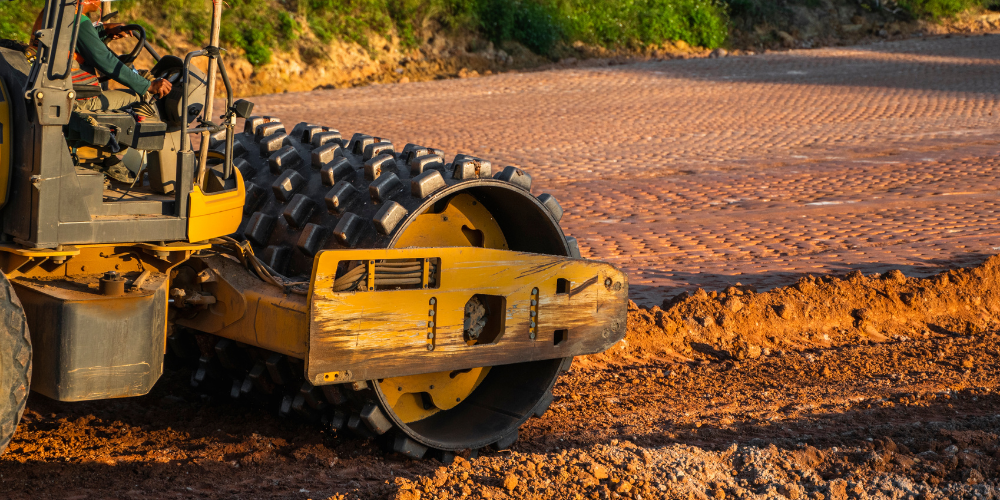
Dirt road stabilization is a treatment that modifies soil properties using specialized agents, creating a compact, resistant surface that supports loads without deforming.
It's applied on industrial access roads, real estate developments, oil-industry earthworks, agricultural roads, pavement base layers, and maneuvering areas where traditional pavement isn't viable or necessary.
Types of Soil Stabilizers: Comparison
There are several types of soil stabilizers on the market, each with specific technical and economic characteristics. The following table compares the most commonly used options to help you make an informed decision:
| Feature | Ionic Stabilizer | Lime | Cement | Asphalt Emulsion |
|---|---|---|---|---|
| Dosage | 0.05-0.065 L/m³ | 2-6% by weight | 3-8% by weight | 4-7% by weight |
| CBR increase | 100-400% | 40-80% | 80-150% | 30-60% |
| Curing time | 1-2 days | 3-7 days | 7-14 days | 2-5 days |
| Estimated service life | 3-6 years | 3-5 years | 8-12 years | 4-7 years |
| Water resistance | Excellent | Medium | Good | Very good |
| Soil types | Broad, except pure sand | Clayey | Granular | Medium |
| Environmental impact | Very low | Medium | Medium-high | Very high |
| Initial cost | Low | Medium | High | Medium-high |
| ROI (payback) | 8-14 months | 18-24 months | 12-18 months | 15-20 months |
Ionic Soil Stabilizer (Advanced Technology)
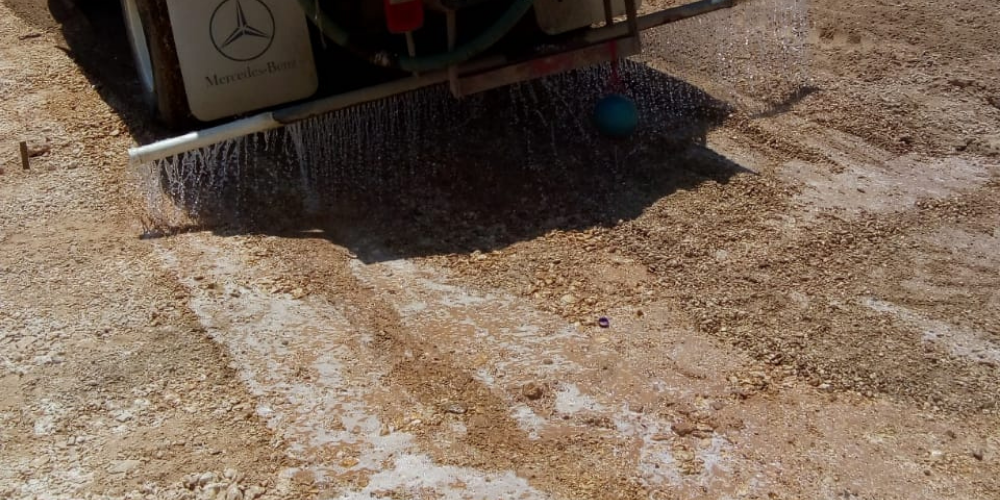
The ENFIRME ionic soil stabilizer is a liquid compound of organic origin that acts at the molecular level. It changes the particles' polarity, eliminates voids, and increases the material's density by up to 15%. The result: a hydrophobic soil that repels water.
Key advantages:
- Ultra-efficient dosage: 0.05 to 0.065 L/m³ vs. 2-8% by weight for other methods.
- CBR increase: Up to 400% in plastic soils and 100% in less plastic soils.
- Speed: Ready upon compaction vs. 7-14 days for cement or asphalt.
- Durability: Service life 6 times longer than untreated soils
- Environmental: Non-toxic, no impact on water or wildlife
Traditional methods
Lime: Economical but requires greater thickness and prolonged curing. Ideal for limited budgets with light traffic.
Cement: High strength, but too rigid, prone to cracking. Requires 7-14 days of moist curing and greater material and labor consumption during application.
Asphalt emulsions: Good surface waterproofing, but effectiveness varies depending on climate and soil type (subject to possible cracking from capillary water action in the base layer).
Which stabilizer is best for your project? Request a free technical evaluation
How to Stabilize a Dirt Road: Professional Process
Proper application of dirt road stabilization follows 5 technical phases:
1. Geotechnical analysis
Prior laboratory studies to determine the type of soil to be treated and classify it according to the chart (USCS/AASHTO), bearing capacity (CBR), and optimum moisture content, so the exact stabilizer dosage can be determined based on its plasticity and grain-size distribution (0.05 to 0.065 L/m³ for ENFIRME ionic stabilizer).
2. Site preparation
Full clearing, grading of levels and slopes (2-4% cross slope), controlled scarification to a depth of 15-25 cm, and pulverization of the soil to achieve a homogeneous material.
3. Applying the stabilizer
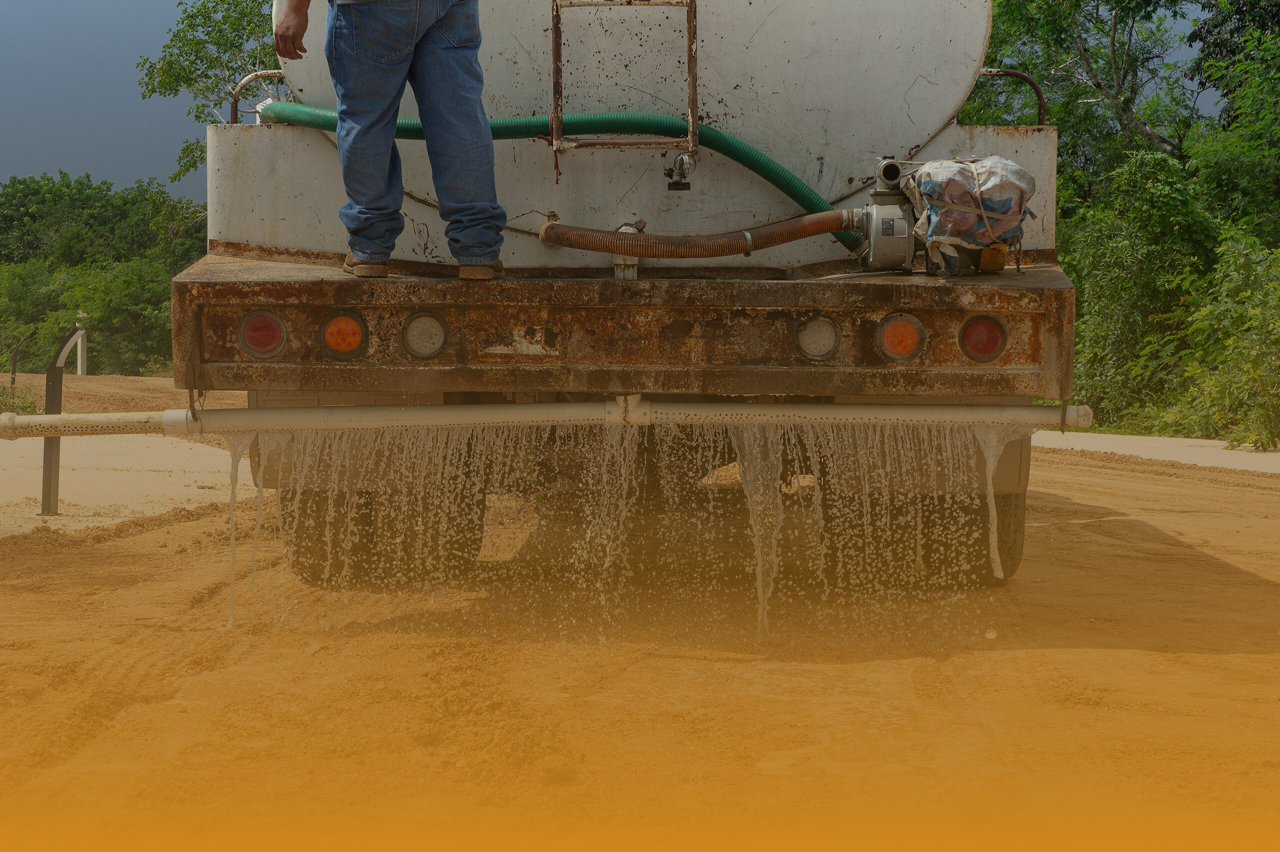
Precise dilution of the ENFIRME ionic stabilizer in water, uniform spraying using a calibrated water tank, deep mixing with a motor grader, and optimum moisture adjustment. Dosage is based on m² or m³, and the amount of water is relative to the moisture content of the material on site.
4. Compaction
Vibratory rollers (less plastic materials) or sheepsfoot rollers (mostly plastic materials) in controlled passes until reaching a minimum of 95% modified Proctor density. Quality control every 100-150 meters.
5. Curing and opening
Light watering for 5-7 days if there's no rain. The road can be used immediately, although it's recommended to limit heavy loads for the first 24 hours. Heavy traffic helps improve compaction. Profile corrections should be made before the material fully dries.
Why the Ionic Stabilizer Outperforms Traditional Methods
- Permanent molecular change: Irreversible transformation vs. chemical bonds that degrade with water and time
- Extreme efficiency: Dosage 10-20 times lower than lime or cement = less transport, storage, and application
- Water resistance: Hydrophobic soil eliminates swelling, loss of support, and erosion during rains
- Versatility: Works on clays, silts, and fine granular soils where lime/cement have limitations
- Speed: 1-2 days vs. 7-14 days of mandatory curing for cement
- Sustainability: Non-toxic, no water contamination, lower CO2 emissions vs. cement/lime production
See real stabilization projects. View our portfolio of success stories
Profitability: An Investment That Pays for Itself
Soil improvement for construction with ionic stabilizer generates measurable returns:
Maintenance savings:
- Untreated roads: Grading every 2-4 weeks, constant pothole repair
- Roads treated with ENFIRME ionic stabilizer: Minor maintenance annually
- Reduction in annual maintenance costs.
Operational benefits:
- 12-15% less fuel consumption from lower rolling resistance
- Longer life for tires, suspensions, and mechanical components
- Continuous operation with no weather-related interruptions
- 15-25% increase in land value for properties with stabilized access roads
Typical payback period:
- Industrial projects with heavy traffic: 8-14 months
- Real estate developments: 12-18 months
- Agricultural roads: 10-16 months
Applications of Dirt Road Stabilization
Grupo Enfirme has applied ionic soil stabilizer in:
- Poultry/livestock sector: Biosecurity arches, farm access roads, biosecurity zones
- Oil sector: Earthworks for gas stations, well access roads, platforms
- Real estate developments: Roadways in urbanization projects, temporary access roads
- Industrial parks: Maneuvering yards, storage areas, internal roadways
- Mining and agriculture: Access roads, high-traffic operational areas
Your project needs professional stabilization. Schedule a free technical visit
Conclusion: Invest in Proven Technology
Dirt road stabilization with ionic technology isn't an expense, it's a strategic investment. The numbers are clear: 60-75% less maintenance, service life 6 times longer, continuous operation with no weather-related interruptions.
At Grupo Enfirme, more than 16 years applying ENFIRME ionic stabilizer on industrial and commercial projects allow us to guarantee measurable results. Every square meter treated represents ongoing operational savings and peace of mind.
TURN YOUR ROADS INTO LASTING ASSETS
Grupo Enfirme - Ionic Stabilization Specialists

.png)


