


.png)
Before placing the first beam, raising a wall, or pouring concrete, there's one decision that determines everything: can the soil where you're going to build support what you're going to put on top of it?
In Mexico, millions of square meters of construction — from industrial warehouses in the Bajío to real estate developments in the southeast — are built on soils that, in their natural state, aren't suitable. Expansive clays, soft soils, highly shrinkable soils, or land with high moisture content are realities that builders, engineers, and developers face every day.
Soil improvement for construction is the set of techniques and materials that turn deficient land into a reliable foundation base. Doing it right saves on foundation costs, prevents differential settlement, and extends the building's service life. Doing it poorly, or not doing it at all, can lead to cracking, subsidence, and costly repairs years later.
In this article we explain the main techniques available in the Mexican market, when to use each one, and what factors determine the best decision for your project.
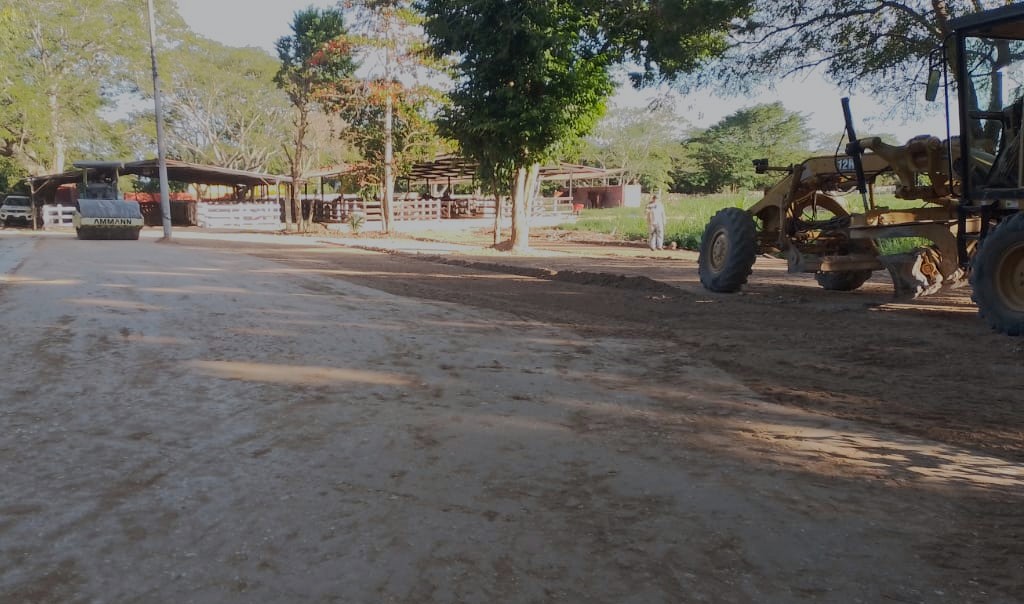
Why is natural soil almost never enough?
Most terrain in Mexico presents some level of problem for construction. Clay soils in the southeast expand when they absorb water and shrink when they dry out, causing movement that damages structures. Silty soils in the Bajío erode easily. Granular soils in the north lose cohesion under heavy loads.
A soil analysis for construction is the mandatory starting point for any project. Without that diagnosis, choosing an improvement technique is a shot in the dark.
The most common problems that require improvement are: low bearing capacity (insufficient CBR), high plasticity or shrinkage, groundwater presence, uncontrolled fill, and organic soils with decomposing matter.
Main soil improvement techniques for construction
The techniques available in Mexico range from chemical methods to mechanical and substitution methods. The right choice depends on the soil type, the type of project, the budget, and the time available. The table below summarizes the most widely used options:
| Technique | Ideal soil | Project type | Relative cost | Time |
|---|---|---|---|---|
| ENFIRME ionic stabilization | Clay, silty, granular | Roads, industrial, earthworks | Low | 1–2 days |
| Lime | Clay (moderate PI) | Subgrade, earthworks | Medium | 3–7 days |
| Portland cement | Granular | Bases and subbases | High | 7–14 days |
| Mechanical compaction | Any, with optimum moisture | Fill, platforms | Medium | Variable |
| Soil replacement | Soil that can't be improved in place | Special foundations | Very high | Variable |
*Data based on SCT standards, the ENFIRME technical data sheet, and Mexican construction industry standards.
Not sure which technique applies to your soil? Tell us about your case via WhatsApp.
When to use each technique?
Ionic stabilization: For road, industrial, and earthwork soils
It's the most versatile technique and the one with the lowest relative cost currently available in Mexico for soil improvement for construction projects on road and industrial surfaces. It acts at the molecular level: it permanently changes the polarity of the soil particles, makes it hydrophobic, and increases its density and load-bearing capacity.
It applies to: dirt roads, maneuvering yards, industrial platforms, access roads to farms, gas stations, and mining areas. It works on clay, silty, and granular soils with a minimal fines content.
Lime stabilization: for high-plasticity clays
Lime reacts with the clay minerals and reduces its Plasticity Index. It requires between 2 and 8% by weight of the treated soil, depending on the material's plasticity, and a curing period of 3 to 7 days. It's an accessible option for subgrades and earthworks, but it doesn't offer long-term water resistance and is hard to handle in high humidity or wind.
Cement stabilization: for bases and subbases
It produces high initial strength and is ideal for pavement bases on granular soils. Its biggest limitation is the curing time (7 to 14 days with controlled moisture), the risk of cracking, and the cost of materials and labor.
Mechanical compaction: the preliminary step in almost every project
Vibratory rollers, plate compactors, or tampers are used to densify the soil before construction. It's a necessary step in almost any project, but on its own it doesn't solve problems of plasticity, expansion, or water saturation.
Soil replacement: when the land is beyond fixing
It consists of removing the problematic soil and replacing it with selected material. It's the most expensive solution and the one with the greatest environmental impact due to material transport and disposal. It's reserved for cases where the other techniques aren't viable.
Frequently asked questions about soil improvement
What's the best technique for soil remediation?
It depends on the soil type and the final use. For road and industrial projects, ionic stabilization offers the best balance of cost, speed, and durability. For pavement sub-bases over granular soils, cement provides better strength. For high-plasticity clays with no speed requirements, lime is an accessible option. There's no universal technique: prior laboratory analysis defines the right answer.
How can a soil with a high shrinkage percentage be improved?
Soils with high linear shrinkage are expansive clays of type A-7-5 or A-7-6. Ionic stabilization can reduce their Plasticity Index by up to 30% and increase their CBR by 300 to 400%, virtually eliminating seasonal shrinkage and expansion. Lime also reduces plasticity, but requires a higher dosage and longer curing time. In both cases, the geotechnical diagnosis determines the exact dose.
Does soil improvement reduce foundation costs?
Yes. A well-improved soil can allow for shallow foundations where piles or deep foundations would previously have been required. In real estate and industrial development projects, this represents significant savings in time and budget.
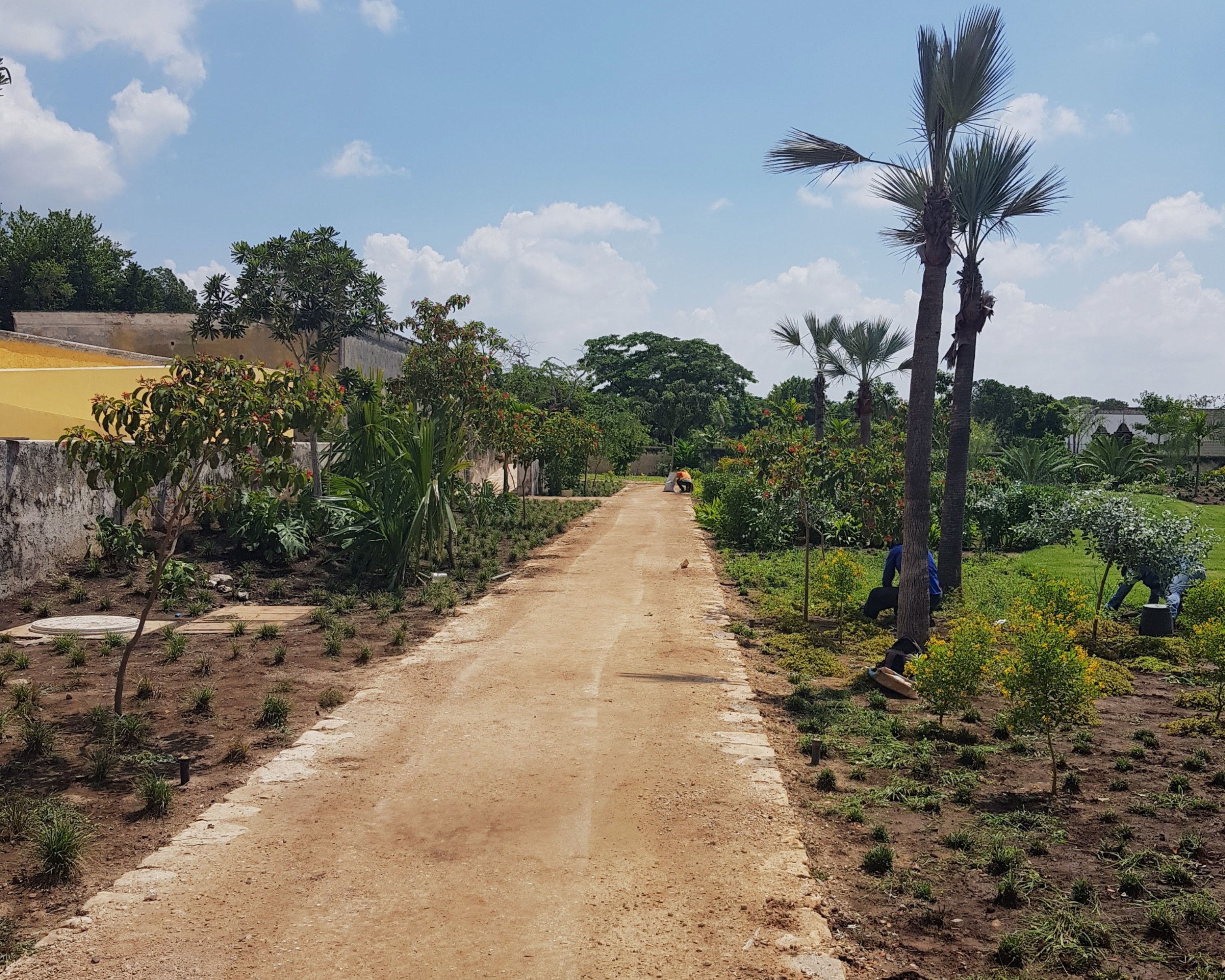
Why choose Grupo Enfirme for your soil improvement?
Grupo Enfirme has spent more than 16 years applying ionic soil stabilization on industrial, road, and agricultural projects throughout Mexico. Its technology is backed by the SCT (NOM N-CTR-CAR-1-04-003/14), EPA, PROFEPA, CNDA, and IECA — certifications that most providers don't have.
Every project starts with a laboratory analysis to determine the soil type, its AASHTO classification, and the exact dosage of the ionic stabilizer. The technical team provides support from diagnosis through to opening to traffic or the start of construction, with verifiable results.
Prior geotechnical analysis (CBR + Atterberg limits) · Exact dosage by soil type · On-site technical support · Training for construction staff · Product delivery in 50–60 L drums to any state in Mexico in approximately 15 business days.
Soil improvement for construction isn't an optional step: it's the difference between a project that lasts decades and one that starts failing within the first few years. Choosing the right technique is what determines whether the investment pays off.
The ENFIRME ionic stabilizer is the most efficient solution for most road and industrial projects in Mexico: fast, cost-effective, permanent, and with proven technical and environmental backing.
Ready to start your project? Request advice from our technical team or get direct support on WhatsApp.

.png)


